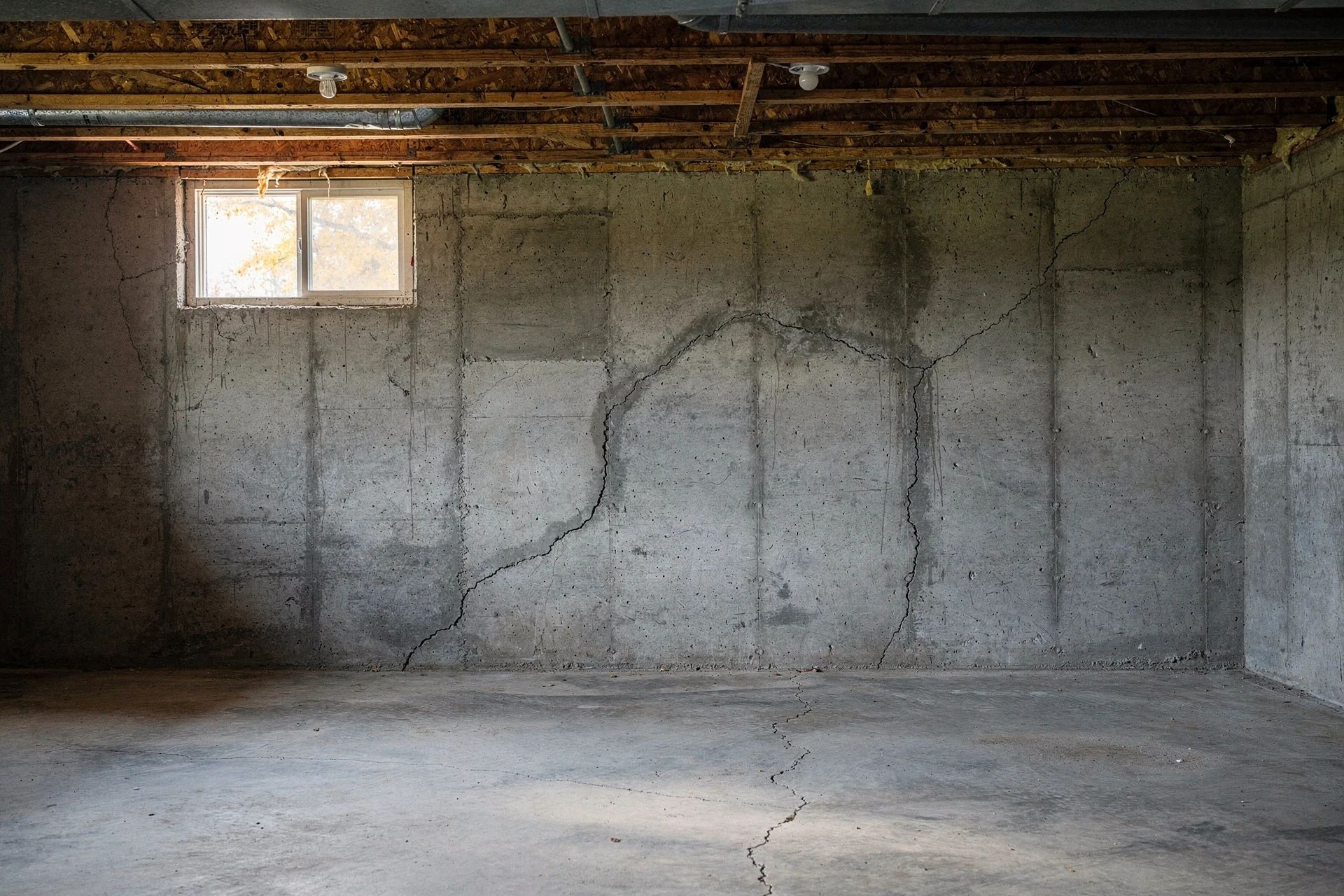
Fort Wayne, Indiana
Foundation Repair in Fort Wayne, IN
A crack that keeps getting wider, a basement wall that leans in, doors that suddenly stick. Tell us what you are seeing and we will connect you with a local foundation repair contractor who can inspect it and give you a written quote.
- Free inspection request
- No obligation to hire
- Contractors who work in Allen County
A referral service, not a contractor. Fort Wayne Foundation Repair Co passes your request to an independent local contractor who serves your area. That contractor handles the inspection, the quote, the work and any warranty.
Get a Free Foundation Inspection
Send a quick request. A local contractor will get back to you.
How it works
From a Cracked Wall to a Written Quote
- Tell us what is happening
Send the short form. Where the cracks are, when you first noticed them and whether water comes in helps the contractor come prepared.
- A local contractor inspects
An independent foundation contractor who works in your area calls you to set up a visit and look at the walls, floors, footings and yard.
- You get a written quote
You see what they found, what they recommend and the price. You decide whether to go ahead. Nothing is owed for the request.
Why Fort Wayne foundations move
Clay Soil, Water and Freeze: What Moves a Foundation
Fort Wayne grew up where the St. Marys and St. Joseph rivers join to form the Maumee, on ground shaped by the glaciers. Under most of Allen County lies a thick layer of glacial deposits, much of it clay-rich till. Clay holds water, swells when it is wet and shrinks as it dries out.
That cycle is hard on foundations. Wet springs, when snowmelt and rain arrive together, load the soil against basement walls. Dry late summers pull moisture back out and let the ground under a corner of the house drop. Winter frost adds its own push near the surface. Over years, the result is cracked and bowing walls, settled footings and slabs that sink.
Older neighborhoods near downtown add aging block and stone foundations to the mix. Newer subdivisions on the edges of the city have their own weak spot: backfill around the house that keeps settling for years.
- A short downspout drops roof water against the foundation
- The yard slopes toward the house instead of away from it
- Loose backfill next to the wall soaks up water
- Wet clay pushes on the basement wall
- The wall cracks horizontally and bows inward
- In dry spells, clay shrinks and pulls away
- The footing settles where the soil under it is soft
Fort Wayne Foundation Facts, With Sources
39.5 inches
Average yearly precipitation at Fort Wayne International Airport over 1991 to 2020. Single years ranged from 28.3 to 49.6 inches, so the soil around a foundation swings between wet and dry.
Source: GLISA, University of Michigan
50 to 200+ feet
Thickness of the glacial deposits under Allen County, made up mostly of clay-rich till. Clay holds water and swells when wet, then shrinks as it dries.
Source: Indiana Academy of Science, Allen County soils study
March 1982
Rapid snowmelt on top of moderate rain caused flooding across northern Indiana. On most large streams of the Maumee River basin it was the worst flooding since 1913.
Over $150
Indiana's Home Improvement Contract Act covers home improvement agreements over $150. The Court of Appeals reads it as requiring a written contract signed by both parties, with a copy given to the homeowner right after signing.
Source: Indiana Judicial Branch, Court of Appeals case summary (2024)
Figures checked October 2026.
Signs of foundation problems homeowners notice first
Cracks in basement walls
Thin vertical cracks in poured walls are common and mostly a water problem. Horizontal cracks, stair-step cracks in block walls and cracks that keep getting wider point to pressure or movement.
Doors and windows that stick
When part of a house settles, door and window frames go out of square. Doors start to rub or swing open on their own, and diagonal cracks appear at the corners of the frames.
Sloping or bouncy floors
A floor that slopes toward one wall can mean the foundation under that side has settled. A floor that sags in the middle is more often a beam or support problem inside the house.
Gaps outside the house
Brick that cracks in a stair-step pattern, a chimney leaning away from the wall, or gaps opening around windows, garage doors and trim are outside signs of the same movement.
Water in the basement
Water and foundation problems travel together. Wet soil is what pushes on basement walls, and cracks give that water a way in. Fixing one without the other often means the problem comes back.
Sinking slabs next to the house
Driveways, walks, patios and stoops that drop or tilt toward the foundation usually sit on fill that has settled. They also send rain straight toward the basement wall.
Not sure if what you see is normal? Read our guide to signs of foundation problems and when to worry.
Under the footing
Settling Foundations: Piers and Leveling
When the soil under part of a house compresses, washes out or shrinks, that part of the foundation drops. Patching the cracks it leaves behind does not stop it. Structural foundation repair moves the weight of the house onto something that will not move: steel piers that reach firmer soil below the clay.
- Push piers are driven down using the weight of the house as resistance
- Helical piers are screwed in like large anchors, which suits lighter loads, porches and additions
- Each pier is fastened to the footing with a steel bracket, then the load is transferred to it
- Once the piers hold, the house can often be lifted back toward level, carefully, to limit new cracks
- Inside, adjustable steel posts or shims can level a sagging floor that is not a footing problem
Read about foundation piering and house leveling in Fort Wayne.
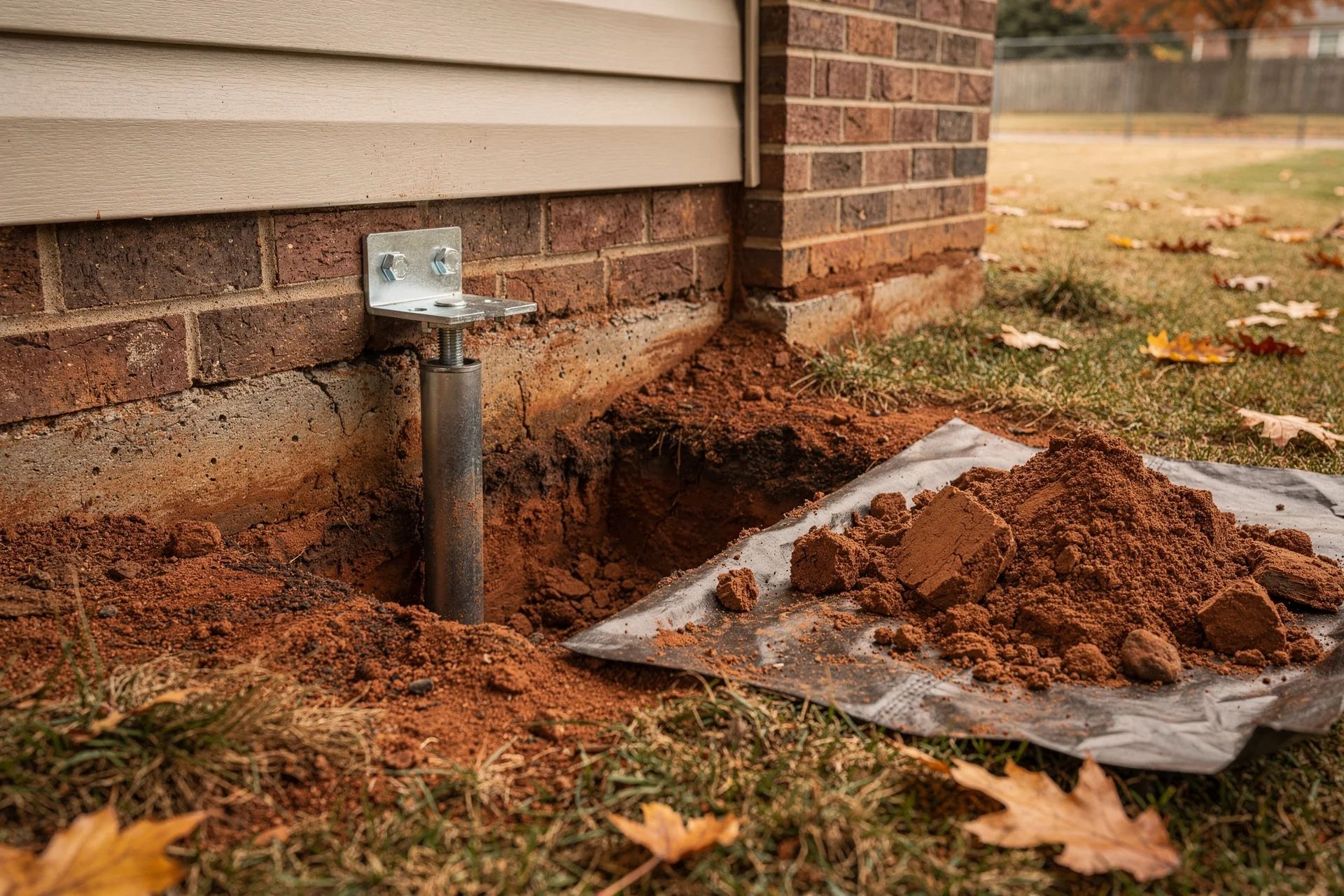
- A footing that has settled below its original level
- A small hole is dug beside the footing
- A steel bracket is fastened under the footing
- The steel pier shaft goes down through the soil
- Soft or wet clay near the surface cannot carry the load
- The pier bears on firm soil below
- Jacks lift the footing, then the load is locked onto the pier
Basement walls
Cracked and Bowing Basement Walls
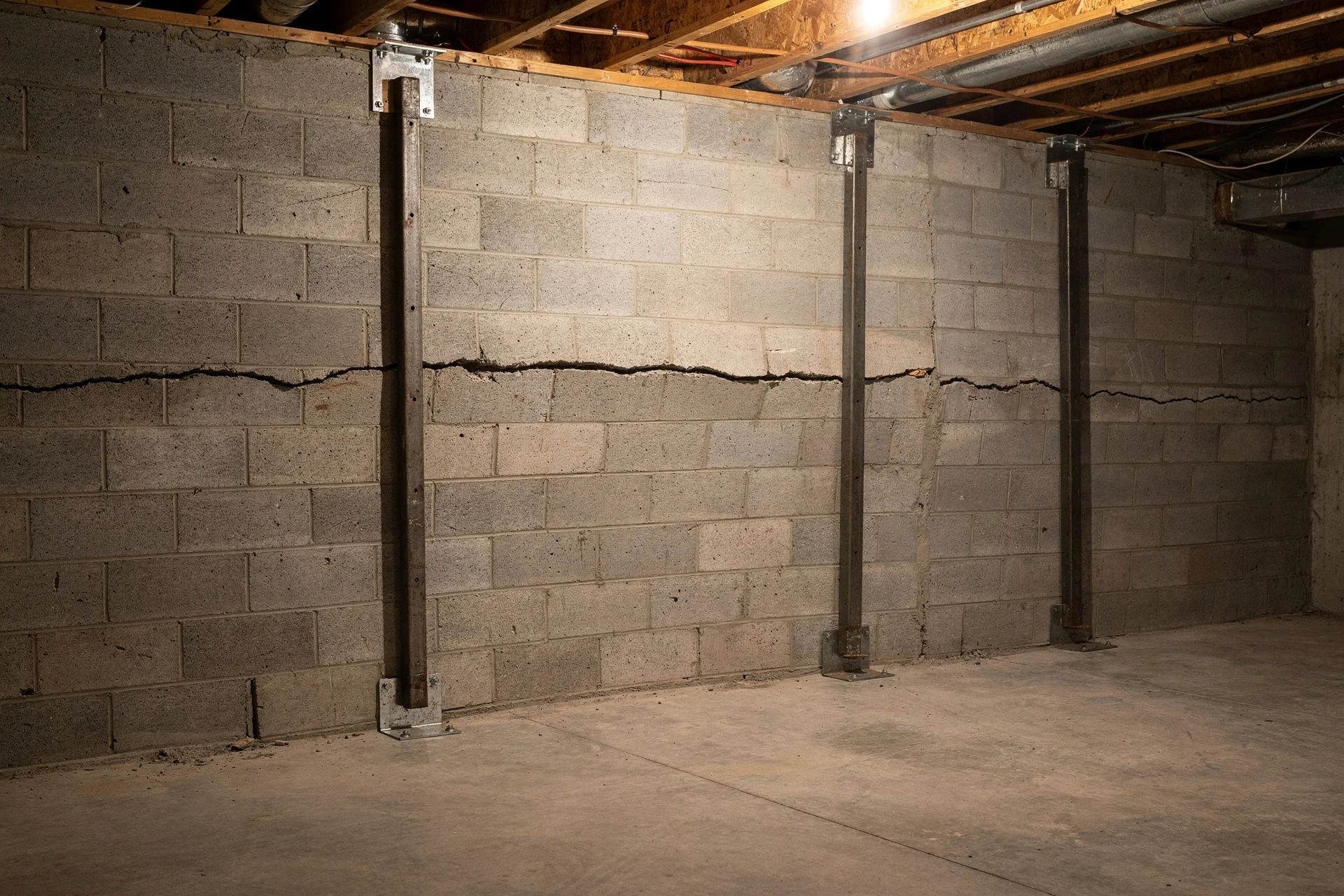
Many Fort Wayne homes have full basements, and their walls hold back wet clay for much of the year. How a wall cracks says what is going on:
- Thin vertical cracks in poured walls usually come from the concrete shrinking as it cured. They leak more often than they move, and injection seals them.
- Stair-step cracks along the mortar of a block wall come from settling or soil pressure.
- Horizontal cracks and bowing mean the soil is pushing the wall in. Carbon fiber straps, steel braces or wall anchors stop the movement, and a wall that has gone too far is rebuilt.
Because water in the soil drives the pressure, a lasting wall repair usually comes with drainage: better grading and downspouts outside, or basement waterproofing inside. See foundation crack and wall repair.
Services
Foundation Repair Services in Fort Wayne
Foundation problems often have more than one cause, so the fix can combine several of these services. A contractor will tell you which ones apply after an inspection.
Foundation Piering & House Leveling
Helical and push piers that reach firmer soil, plus leveling for settling slabs, sagging floors and pier and beam homes.
Foundation Piering & House Leveling in Fort WayneFoundation Crack & Wall Repair
Leaking or widening cracks, bowing block walls and basement wall repair, from crack injection to steel braces and anchors.
Foundation Crack & Wall Repair in Fort WayneBasement Waterproofing
Interior drain tile, sump pumps and exterior drainage that relieve the water pressure behind cracked and bowing walls.
Basement Waterproofing in Fort WayneConcrete Leveling & Mudjacking
Lifting sunken driveways, walks, patios, steps and garage floors with mudjacking or polyurethane foam instead of tearing them out.
Concrete Leveling & Mudjacking in Fort Wayne
How to Choose the Right Repair
Start with what you see. Sticking doors, sloping floors and diagonal cracks above openings point to settling and piers or leveling. A wall that leans in or a horizontal crack points to wall bracing. Water at the bottom of the walls points to drain tile and a sump pump. A driveway or patio that dropped points to concrete leveling. Not sure? Describe it in the form and the contractor will sort it out during the inspection.
Before you sign
What a Good Foundation Inspection Covers
A careful foundation inspection looks at the whole house, inside and out, not just the crack you called about. Use these lists to judge any foundation repair company, including the one we connect you with.
What the contractor should check
- Every crack: where it is, its direction, its width and whether one side sits higher
- Wall type (poured, block or stone) and any bowing or leaning, measured
- Floor levels across the house, not just where it feels off
- Doors, windows and drywall upstairs for signs of movement
- Gutters, downspouts, grading and slabs around the outside
- Water in the basement, the sump pit and where it discharges
- Whether the movement looks active or old, and whether an engineer should weigh in
Questions to ask before you hire
- Are you licensed or registered where I live, and can I see proof of insurance?
- What exactly is included: how many piers or braces, where, and how deep?
- Is the goal to stabilize only, or to stabilize and lift?
- Will your own crew do the work, or a subcontractor?
- Is a permit or an engineer report needed, and who arranges it?
- What does the warranty cover, for how long, and does it transfer if I sell?
- What gets restored afterward: landscaping, concrete, finished walls?
Service area
Communities We Serve Around Fort Wayne
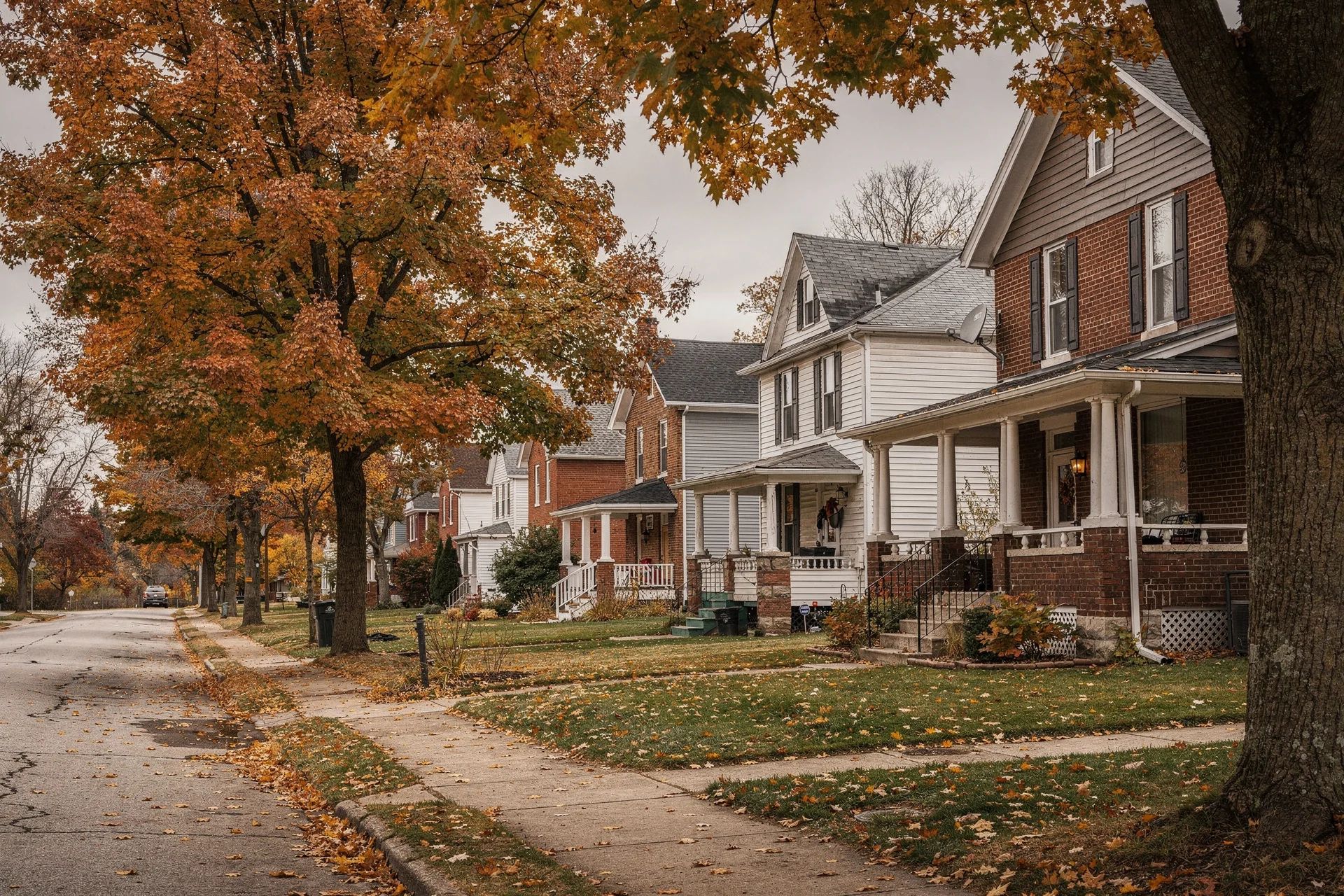
The Fort Wayne area is not one landscape. East of the city, the old Lake Maumee plain is flat and heavy with clay. To the north, newer subdivisions sit on the rolling till plain. To the northeast, Cedar Creek and the St. Joseph River cut wooded valleys with sloped lots. Southwest, the city gives way to open farmland. The cause of a foundation problem, and the right fix, follow the ground your house sits on.
We take requests from the city of Fort Wayne and these nearby towns. Each page explains what is different about foundations there.
- Foundation repair in New HavenJust east of Fort Wayne along the Maumee River, on flat ground with heavy clay soil.
- Foundation repair in HuntertownNorth of Fort Wayne along Lima Road, with many newer subdivisions on the till plain.
- Foundation repair in Leo-CedarvilleNortheast of Fort Wayne where Cedar Creek meets the St. Joseph River, with wooded, sloped lots.
- Foundation repair in AuburnDeKalb County seat north of Fort Wayne along I-69, with older homes near downtown.
- Foundation repair in RoanokeSmall town southwest of Fort Wayne in Huntington County, just off US 24.
Planning a budget
What to Expect on Price
Price depends on what is moving and how much of the house is affected. These broad ranges help you plan. They are not quotes: the contractor who inspects your home will give you a free written estimate.
| Type of work | Typical range |
|---|---|
| Foundation crack injection (per crack)Epoxy or polyurethane injection of a single poured-wall crack from inside the basement. | $300 to $1,000 |
| Helical or push piers (per pier)Installed under the footing to reach firmer soil. Most settling jobs need several piers, so ask for the total. | $1,500 to $3,500 |
| Bowing wall bracing (per wall)Carbon fiber straps, steel beams or wall anchors, depending on how far the wall has moved. | $2,500 to $12,000 |
| Mudjacking (per slab)Cement-based slurry pumped under a sunken walk, patio, step or driveway section. | $500 to $2,000 |
What moves the price
- How many piers or walls are involved
- How deep firm soil is
- Poured, block or stone walls
- Driveways, decks or finished walls in the way
- Drainage added so the repair lasts
More job types in our guide to foundation repair cost in Fort Wayne.
Questions
Common Questions
Are you a foundation repair company?
No. Fort Wayne Foundation Repair Co is a referral service. When you contact us through this site, your request goes to an independent local contractor who serves your area. That contractor inspects your home, gives you a quote and does the work. You deal with them directly and decide whether to hire them.
Is the inspection really free?
Sending a request through this site is free and does not commit you to anything. The contractors we refer requests to offer a free in-home inspection and written estimate. Confirm this with the contractor when they contact you, before they visit. An independent structural engineer report is a separate, paid service.
How much does foundation repair usually run in Fort Wayne?
It depends on what is moving and how much of the house is affected. Sealing one crack can be a few hundred dollars. Bracing a bowing wall or installing piers under a settling corner often runs into the thousands, and larger structural jobs can reach five figures. Our price guide lists typical ranges by type of job. Only an inspection gives you a real number.
Do I need a structural engineer or a contractor first?
For a single leaking crack or a sunken sidewalk, a contractor inspection is usually enough. For a wall that has moved a lot, a house that is still settling, or a home you are buying or selling, an independent engineer report gives you an opinion from someone who is not selling the repair. Some contractors work with engineers and can arrange one.
How long does the work take?
Crack injection usually takes a few hours. Mudjacking or foam leveling of a slab is often done in a day. Installing piers or bracing a wall typically takes one to a few days depending on how many are needed. Excavating and rebuilding a wall takes longer and depends on weather and access. Your contractor will give you a schedule with the quote.
Do not wait for the next thaw
Seeing New Cracks or a Wall That Moved?
Foundation movement rarely fixes itself, and the repair usually grows with the damage. Send a request and a local contractor will follow up to schedule an inspection.
Also see basement waterproofing and concrete leveling and mudjacking.
Request a Free Inspection
Send a quick request. A local contractor will get back to you.