Fort Wayne, IN foundation services
Foundation Crack & Wall Repair in Fort Wayne, IN
Most foundation cracks are not an emergency, but they should not be ignored. Some only let water in. Others show that the soil outside is pushing the wall or that part of the house is moving. An inspection tells you which kind you have.
- Free inspection request
- No obligation to hire
- Contractors who work in Allen County
Get a Free Foundation Inspection
Send a quick request. A local contractor will get back to you.
What Different Foundation Cracks Mean
- Thin vertical cracks in poured concrete: usually from the concrete shrinking as it cured. Common and rarely structural, but a frequent source of leaks.
- Diagonal cracks: often from uneven settling of the soil under one part of the foundation, especially near corners.
- Stair-step cracks in block walls: cracks that follow the mortar joints, from settling or soil pressure.
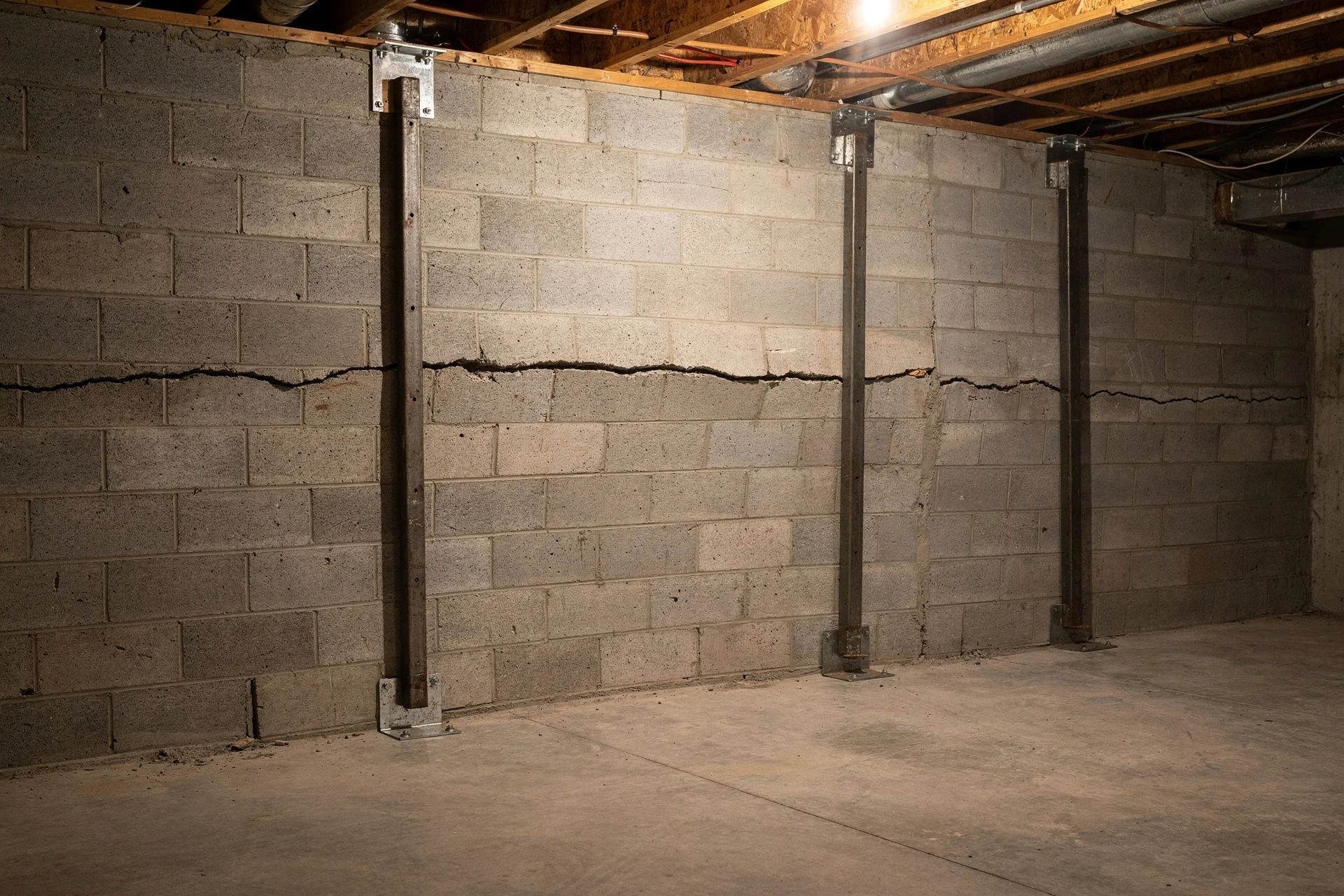
- Horizontal cracks: a sign that soil pressure or frost is pushing the wall inward. These deserve a prompt look.
- Cracks with one side higher or wider at one end: the two sides have moved relative to each other, which points to active movement.
To see whether a crack is moving, mark both ends with a pencil and write the date next to it. Check again every few weeks, and after the spring thaw. A crack that grows longer or wider needs attention sooner.
Foundation Crack Repair
A leaking crack in a poured wall is usually sealed by injecting epoxy or polyurethane from the inside. Epoxy bonds the concrete back together. Polyurethane stays flexible and is often used when the goal is to stop water. Cracks in block walls are harder to seal on their own and are often handled together with drainage or bracing. A crack caused by settling is a symptom: sealing it without addressing the movement means it will likely open again.
Bowing Basement Walls
Around Fort Wayne, clay-rich soil holds water against basement walls, swells when wet and pushes again when it freezes. Over many winters, that pressure can push a wall inward, most often a concrete block wall. Signs include a horizontal crack partway up the wall, blocks that are out of line, or a wall that looks curved when you sight along it.
Common ways to stabilize a bowing basement wall:
- Carbon fiber straps: bonded to the wall to stop further movement. Used for walls that have moved only a little.
- Steel wall braces: vertical steel beams anchored to the floor and the floor framing above. Some can be tightened over time.
- Wall anchors: steel rods run through the wall to plates buried in the yard. They need clear space outside the wall.
- Excavate and rebuild: for a wall that has moved too far to brace. The soil is dug out, the wall is rebuilt or straightened, and drainage is added before backfilling.
For a wall that has moved a lot, a contractor may recommend a structural engineer evaluation before giving you a price. Be cautious of anyone who promises a fix for a badly damaged wall without seeing it.
Basement Wall Repair and Water
Cracks and bowing walls almost always come with water. Water in the soil drives the pressure, and the cracks give it a way in. Water also enters through mortar joints in block walls, around pipes, and through the small metal ties left in poured walls.
A lasting repair deals with both sides: seal or brace the wall, and reduce the water pushing on it. That can mean better gutters and grading outside, interior drain tile along the affected wall, or both. Read more about basement waterproofing in Fort Wayne, or see typical prices in our guide to foundation repair cost in Fort Wayne.
When to Call Sooner Rather Than Later
- A horizontal crack in any basement wall
- A crack that is getting longer or wider, or that has one side higher than the other
- A wall that bulges or leans inward
- Doors or windows upstairs that suddenly stick, along with new cracks downstairs
- Water coming through a crack every time it rains
More Questions About Foundation Crack & Wall Repair
Can I seal a foundation crack myself?
Kits for injecting a single thin crack in a poured wall are sold to homeowners and can work on a crack that only leaks. They do not fix a crack caused by movement, and they are not meant for block walls. If the crack is horizontal, stair-stepped, wider at one end or keeps growing, have it inspected before you seal it, so the evidence is still visible.
Carbon fiber straps, steel braces or wall anchors?
Carbon fiber straps are bonded to the wall and suit walls that have moved only a little. Steel braces are bolted to the floor and the framing above and can be tightened. Wall anchors run through the wall to plates buried in the yard, so they need room outside. The right choice depends on how far the wall has moved and what is on the other side of it.
Will bracing push my bowing wall back into place?
Bracing is mainly meant to stop the wall from moving further. Some systems can be tightened over time to bring a wall back a little, often during dry periods when soil pressure is lower. A wall that has moved a lot usually needs to be excavated and rebuilt rather than pushed back.
What happens to a finished basement wall?
To inject a crack or install braces, the contractor needs to reach the concrete. Drywall, paneling and insulation in front of the affected wall usually come off, at least in part. Ask whether the quote includes putting it back, and fix any water problem before you refinish.
How do I know the repair is working?
Mark the ends of any remaining cracks with a pencil and a date, and measure the wall from a fixed point, such as a string line, every few months. Check again after the spring thaw, when soil pressure is usually highest. Keep the contract and photos: you will want them if a problem comes back, or if you sell the house later.
Keep reading
Related Services
Foundation Piering & House Leveling
Helical and push piers that reach firmer soil, plus leveling for settling slabs, sagging floors and pier and beam homes.
Foundation Piering & House Leveling in Fort WayneBasement Waterproofing
Interior drain tile, sump pumps and exterior drainage that relieve the water pressure behind cracked and bowing walls.
Basement Waterproofing in Fort Wayne
Not sure which service you need? Start with our overview of foundation repair in Fort Wayne, compare typical prices in our guide to foundation repair cost in Fort Wayne, or contact us to request an inspection.